






Top 10 Electric Vehicles (EV) Manufacturers in the World
Hyundai and Kia are planning to launch six EVs in India in the next three years. Both Hyundai and Kia will unveil three EVs each and share them under the skin parts.
Nowadays, electric cars are considered as one of those luxury products that most of us want. It offers a great driving experience with all the advanced and luxurious features. All-electric vehicles (EVs), also called battery electric vehicles, have an electric motor instead of an internal combustion engine. Not only this, since it runs on electricity, these electric cars do not release any harmful gases and do not contain typical liquid fuels like petrol or diesel. They are super eco-friendly and are an alternative to non-renewable and precious energy sources.

But it will first take a lot of time and effort to make these electric cars more affordable and accessible to the common man. Because only then will it be a true success towards its real goal which means ‘to be used as an alternative to petrol or diesel cars’.
There are many electric car manufacturers around the world. But since it is becoming one of the most competitive sectors, only a few of them can provide their best products in the market.
Here is a list of the top ten electric cars around the world:
Tesla
Globally, in the first half of the year 2020, Tesla ranks first and with sales of 179,050 units, this EV maker accounts for 28% of the global market share. There is a high consumer demand for Tesla cars due to their innovative technology, modern design and high performance.
The rear-drive Standard Range Plus model starts at $41,190, which includes a destination fee of $1,200.
Recently in India, Telsa signed an agreement to manufacture electric cars. This could be considered a good and futuristic move by India, but due to a few charging stations across the country, it may not give short term benefits to both the manufacturer and the consumer.
In view of this issue, the government was planning to build more charging stations and for that, a budget was also presented by Finance Minister Nirmala Sitharaman, however, due to COVID-19, these plans are slow but steady. Looks like it’s working.
Renault-Nissan-Mitsubishi Alliance
This alliance is approximately 737,492 .
Electric vehicles were sold from 2009 to the end of 2018.
The alliance has three popular electric cars, namely the Nissan Leaf, Renault Zoe and the Outlander PHEV.
Over 409,000 Nissan LEAFs have been sold worldwide since its launch in 2010. While 133,636 Renault ZOEs were sold worldwide from 2012 to the end of 2018. Groupe Renault plans to include a total of 12 electrified and 8 all-electric vehicles in its range. till 2022.
Volkswagen
It is a German automotive manufacturer founded in 1937 by the German Labor Front, best known for its iconic Beetle. It became one of the largest car makers by worldwide sales in 2016 and 2017.
The two electric car models offered by it are the e-ups! and e-golf. , it sold 64,542 units and accounts for 10% of the global market share.
WORLD
BYD Co. Ltd. was founded in Shenzhen in the mid-1990s as a manufacturer of batteries for brick-shaped cellphones and digital cameras, now accounting for 7% of the total global market for electric cars. Every month, it sells over thirty thousand pure EVs/plug-ins in China. The cheapest model from the brand, which is the e1, starts at $8,950 after subsidies.
For six consecutive years from 2014 to 2019, BYD’s electric vehicles ranked No. 1 in global sales from 2014 to 2019.
Kia and Hyundai
Kia Corporation is the second largest automobile manufacturer in South Korea after its parent company Hyundai Motor Company.
Now, for the next three years, Hyundai and Kia are planning to launch six EVs in India. While they will both cooperate with each other in the production of Hyundai and Kia, each will unveil three electric car models that will look completely different from the outside. To match the affordable market price in India, these electric vehicles will be priced in a sub Rs 15 lakh category. However, their launch is expected in 2024.
Kia and Hyundai both account for 6.5 percent of the global market share and are ranked fifth in the world.
bmw
BMW is a sub-brand of BMW that was founded in 2011 to design and manufacture plug-in electric vehicles. The company initially released two vehicles,
General Motors
General Motors (GM) is an American company that sells a wide range of vehicles worldwide. The first long-range but fully electric vehicle is the Chevy Bolt. With a starting price of $37,500 and a range of 238 miles, it is touted as a compact utility vehicle.
Chevrolet Volt, which is one of its subsidiaries, has won several awards for its eco-friendly range of electric cars. The first award he won in 2009 was the Green Car Vision Award. He won three awards in 2011 alone, including Green Car of the Year, North American Car of the Year and both World Green Cars. He also won the European Car of the Year in 2012 and Green Car of the Year in 2016.
Wade
Ford is a classic American car manufacturer and their flagship electric vehicle is the Ford Focus Electric. It’s an affordable EV with the look and feel of a standard vehicle, but its battery has over 100 miles per charge. This is the electric version of the Ford Focus model.
Toyota
Marking history in the electric car sector, Toyota launched the world’s first mass-produced hybrid electric vehicle called the Prius in 1997. Toyota is working to reduce carbon emissions by introducing electric vehicles as a sustainable vehicle concept in the market. Toyota plans to produce about 70 models of electric cars by 2025.
On 19 April this year, Toyota Motor Corporation (Toyota) announced the Toyota bZ, its newly established range of Battery Electric Vehicles (BEVs), setting up a complete line-up of electric vehicles.
Daimler AG
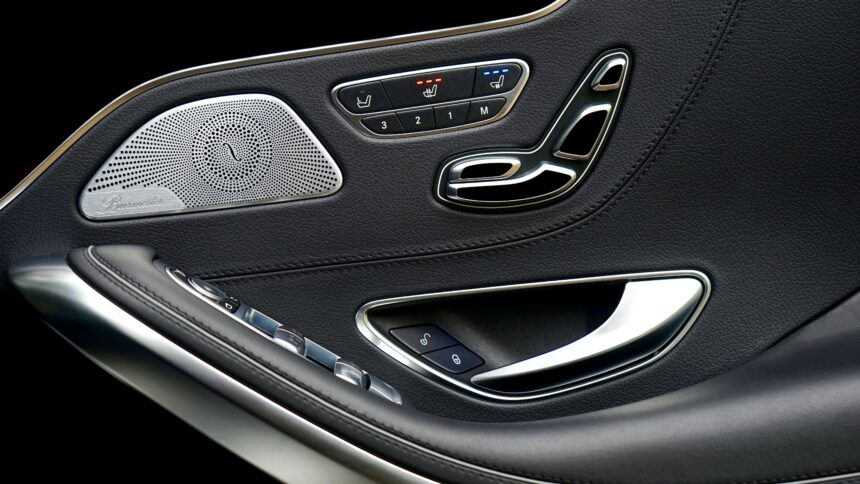
Daimler AG, a German multinational automotive corporation, also known as Daimler-Benz, was formed in 1926 with the merger of Benz & Cie and Daimler Motoren Gesellschaft.
As the world’s largest commercial vehicle maker, Daimler is using new, sustainable driving systems for its trucks, buses and vans as well as its cars. eVito is the second all-electric production model, following the launch of the Vito e-Cell in 2010. Daimler is setting another milestone for the future of electric car production, with a massive order for battery cells by the year 2030.


