



The Search for Space Creatures: Ten Interesting Facts
 |
| Space Creatures |
Is there anyone in this universe besides us?
This is a question that man has been trying to answer for centuries and scientists have been searching for the right answer.
 |
| Space Creatures |
But know one thing, if there is a creature in space, there is a strong possibility that it will be found in a ‘favorable region’.
1 moon stale
Our interest in the life of space creatures began with Galileo’s new telescope, which allowed us to see the sky in the early 17th century.
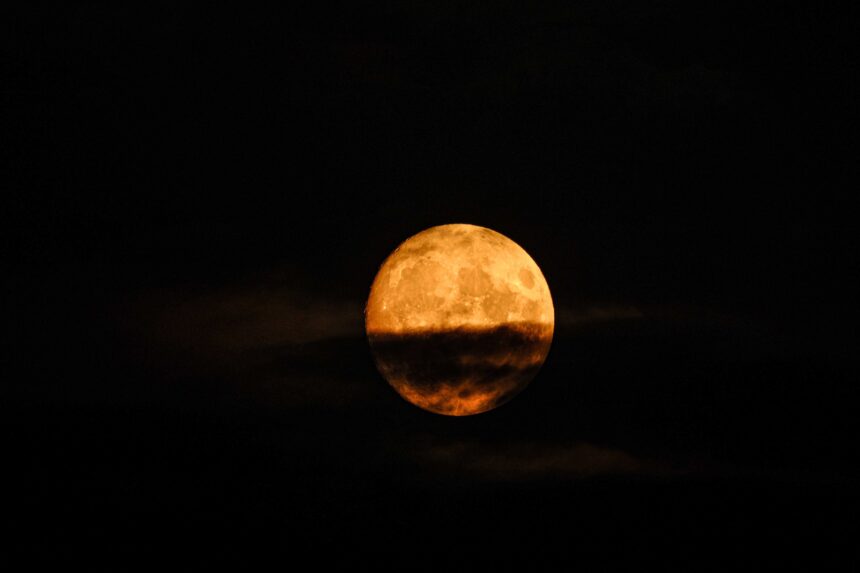
Initially, the spots on the moon were considered oceans! And it was thought that they might contain living things.
But now we know that these spots are not oceans, but pits formed by the collision of asteroids on the surface of the moon.
2 tall Martians
Astronomer William Herschel said in the 1870’s that Martians living on the red planet, Mars, could be taller than humans.
Using more powerful telescopes, they estimated the size of Mars, as well as its weather and length of days.
William Herschel says that the red planet is smaller than our planet, so it has less gravity, which means that the inhabitants of Mars will be taller3 Superior Saturn
The famous German philosopher Emmanuel Kant claimed that the intelligence of space creatures depends on their distance from the sun. Since Mercury is close to the Sun, its inhabitants will be foolish while the inhabitants of Saturn (the farthest planet discovered in Kant’s time) will be extremely intelligent.4 Space Census
In 1848, Thomas Dick, a Scottish pastor and science teacher, tried to calculate the number of space creatures living in the solar system.
He predicted that if all the planets in the solar system were as densely populated as England was then, the total population of the solar system would be 22,000 billion people per 280 people per square mile.
5 Life on the moon
The best place to find life in the solar system may not be on nearby planets like Mars, but on distant moons such as Europa (which revolves around Jupiter) and Enceladus (a moon of Saturn). ).
Liquid oceans are found on both of these moons.
Presumably there is a system for generating internal heat that keeps these oceans in a liquid state.6 distant worlds
Astronomers estimate that there may be as many as 40 billion Earth-like planets in our galaxy alone. About 3,800 of these planets have been discovered so far, but if you measure the entire galaxy, it could take billions of years.
Many experts believe that not all the planets in such a large number could be barren and that life could exist somewhere.7 Signs of life
But how can telescopes detect signs of life on distant planets, since telescopes are not powerful enough to photograph planets in other solar systems?
One way is to detect the gases that living things produce. For example, most of the methane found in the Earth’s atmosphere is produced by animals.8 Favorable region
Scientists believe that the search for life should focus on the planets orbiting a star in a favorable region that is neither too hot nor too cold. Our earth revolves around the sun in such a region.
Scientists have discovered a similar orbit around the nearest star, Proxima Centauri, where a planet orbits.9 Solar sails
Long journeys in space require a lot of energy. A unique design is the solar sail engine, which can fly on the force of the solar wind blowing from the sun in the same way that sail ships sail in the sea.
Ships with such engines gradually increase their speed and may eventually reach 20% of the speed of light.
It would take 20 years for a solar-powered spacecraft to reach the nearest star, Proxima Centauri, but since the star is four light-years from Earth, it would take four years for a one-way signal to arrive from there. Will10 intelligent space creatures
It is possible that there is life somewhere in the universe, but according to most experts, this life will be in a very primitive and simple form, such as germs on the earth, etc.
But can there be more intelligent space creatures like humans or more intelligent than humans, and if so, in what form would they be?
Human culture on Earth is not more than ten thousand years old, whereas modern science began only a few centuries ago. But if there were intelligent beings somewhere in the universe, they would probably be millions or millions of years more advanced than humans.
It is also possible that they do not rely on biological beings and have completely evolved into robots. If that happened then they would not need to live in a favorable region.
However, in order to obtain energy, they would still need to be close to a star or a black hole.